If you’ve scrubbed a pet stain, let it dry, and then caught that same sour smell again a few days later, especially on a humid Perth afternoon, you’re not imagining it. Regular carpet cleaning and DIY scrubbing rarely fix pet odour for good, because they’re treating the wrong problem. Here’s what’s actually going on, and what it takes to get rid of it properly.
Why Pet Urine Smell Keeps Coming Back
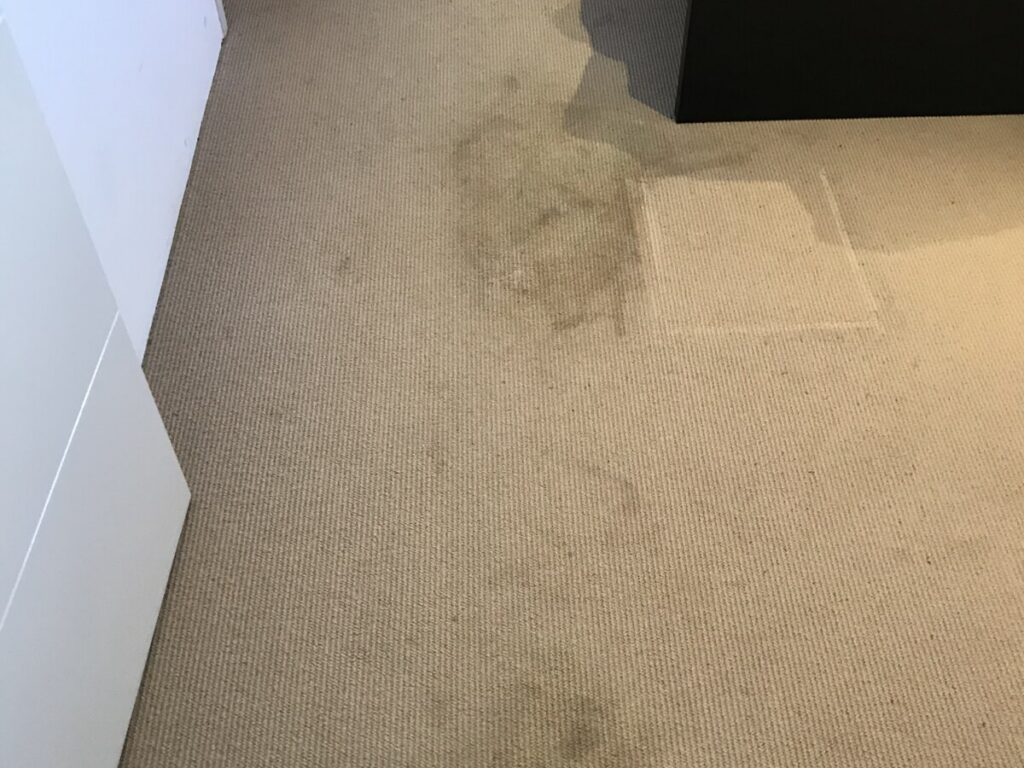
Fresh urine is mostly liquid, so it seems to disappear once you’ve blotted it up. But as it dries, the urea in it breaks down into ammonia and, eventually, uric acid crystals. Those crystals bind tightly to carpet fibres and, if the accident soaked through, to the underlay and backing beneath. Uric acid crystals are non-water-soluble, so soap, carpet shampoo, and most all-purpose cleaners can’t break them down. They just sit there.
Then humidity or moisture reactivates them, releasing that odour all over again. That’s why a carpet can smell fine for days and suddenly reek after a mop, a rainy week, or the air conditioning switching to more humid airflow.
This is also why steam cleaning alone, without the right pre-treatment, can sometimes make things worse. Heat and moisture can reactivate old, dried urine deposits and push them further into the carpet backing if they aren’t neutralised first.
What Actually Works: Enzyme-Based Treatment
The only reliable way to permanently remove pet urine odour is an enzyme-based treatment. Enzyme cleaners contain live, odour-eating bacteria that digest the uric acid crystals and break them down into harmless compounds like water and carbon dioxide, rather than just masking the smell with fragrance.
For this to work, the enzyme solution needs to:
- Reach the full depth of the contamination, including the underlay in serious cases, not just the surface fibres
- Sit for long enough (usually 15 to 20 minutes minimum, longer for older accidents) for the enzymes to fully break down the compounds
- Be followed by proper extraction, so the broken-down residue is actually removed rather than left to dry back into the carpet
Vinegar and baking soda can help freshen a very fresh, minor spot, but on their own they don’t break down uric acid. They’re a supporting step, not a fix for anything beyond a light surface accident.
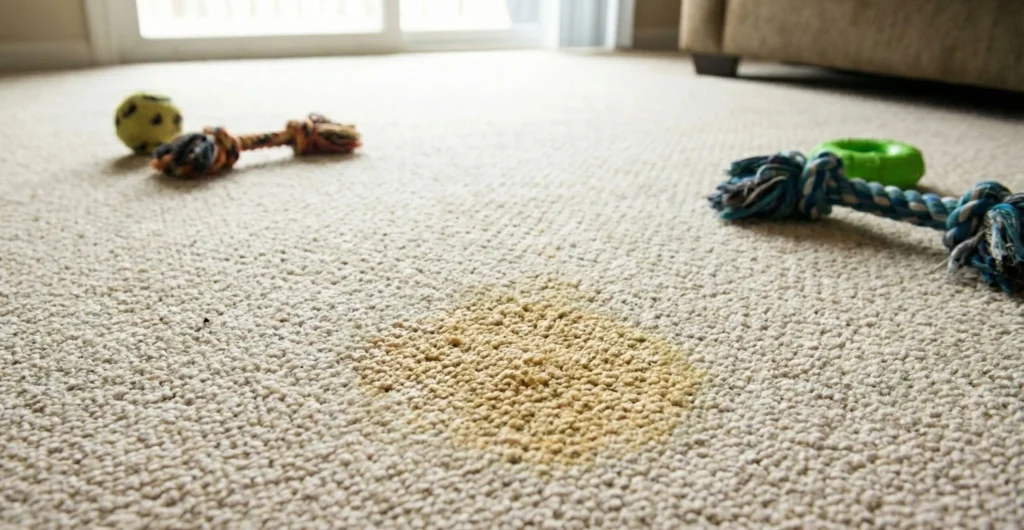
DIY Steps for a Fresh Accident
If you’ve caught the accident early, here’s what actually helps before it sets in:
- Blot, don’t rub. Press clean towels firmly onto the area to absorb as much liquid as possible. Rubbing pushes it deeper into the fibres and spreads the stain.
- Apply an enzyme cleaner to the affected area, saturating it enough to reach where the liquid soaked in, not just the surface.
- Let it dwell. Resist the urge to blot it dry straight away; the enzymes need time to work.
- Blot again and let it air dry fully, with a window open or a fan running to help ventilation.
- Check again after a day or two, ideally on a humid day, since that’s when residual odour tends to resurface.
A UV torch in a dark room can help you find old, dried stains you can’t see in daylight. They’ll show up as a faint yellow-green glow.
When It’s Time to Call a Professional
DIY treatment works for a single, fresh, small accident. It usually isn’t enough when:
- The same spot has been soiled repeatedly, and urine has likely soaked through to the underlay or subfloor by this point
- The smell returns strongly on humid days no matter how many times you’ve treated it
- The stain or odour covers a large area, or you can’t pinpoint exactly where it’s coming from
- It’s an older rental carpet with an unknown history of accidents before you moved in
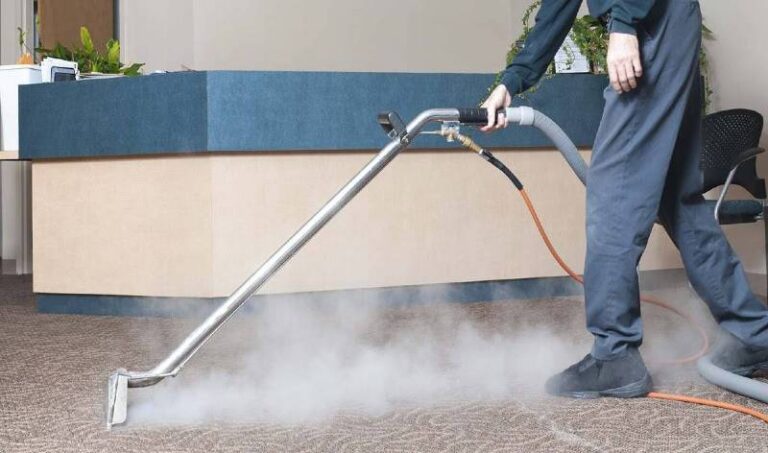
At this stage, surface treatment isn’t enough; the contamination needs to be addressed below the carpet face. Our carpet stain removal service in Perth uses professional-grade enzyme treatments that target odour at the source, followed by hot water extraction with truck-mounted equipment to flush out the broken-down residue rather than leaving it to dry back in. It’s backed by our stain-free guarantee: if the smell or mark isn’t fully gone, we come back and re-treat at no extra cost. You can see indicative costs on our pricing page or get a tailored quote for your home.
It’s Not Just Carpet: Pet Accidents on Furniture
Pet accidents don’t stop at the carpet. Couches, rugs, and mattresses trap the same kind of odour-causing residue, and they need the same enzyme-first approach rather than a quick surface wipe. If your pet has had an accident on furniture as well, our upholstery cleaning and leather couch cleaning services use the appropriate method for the fabric type, and our rug cleaning team treats wool, Persian, and synthetic rugs on site without needing to remove them from your home.
How Often Should Pet Owners Get Carpets Professionally Cleaned?
Most Perth households with pets benefit from a professional clean every 6 to 12 months, even without an obvious accident, since dander, dirt, and everyday shedding build up in the fibres regardless of visible stains. If accidents are more frequent, more regular attention to those specific areas will stop odour from setting in permanently. Our eco-friendly, non-toxic cleaning solutions are safe for pets and kids from the moment carpets are dry, typically within 4 to 6 hours of a clean.
Frequently Asked Questions
Why does my carpet smell like pet urine even after I’ve cleaned it?
Regular cleaning products don’t break down the uric acid crystals urine leaves behind once it dries. The smell resurfaces when humidity or moisture reactivates those crystals, so an enzyme treatment is needed to actually break them down rather than just mask the odour.
Can steam cleaning alone remove pet odour?
Not reliably on its own. Heat and moisture can reactivate dried urine deposits if they aren’t pre-treated with an enzyme solution first. The most effective approach combines enzyme treatment with proper hot water extraction.
Is professional pet odour treatment safe for pets and kids?
Yes. Pride Carpet Cleaning uses eco-friendly, non-toxic solutions that are safe for children, pets, and allergy sufferers once the carpet has dried, generally within 4 to 6 hours.