To keep your mattress clean and mould-free, use a breathable protector, vacuum it regularly, blot spills straight away with as little liquid as possible, and let it dry and breathe fully. Moisture is what turns a small stain into a musty, mouldy problem.
This guide covers a simple mattress care routine, how to treat common stains, how to remove odours, and how to spot and deal with mould.
Why Mattresses Get Mouldy
Every night your mattress absorbs sweat, body oils and skin flakes. It can’t go through the wash, so whatever soaks in stays in. Warmth plus trapped moisture is all mould needs.
The usual causes are:
- Sweat that never fully evaporates, especially under a non-breathable cover
- Spills that were rubbed or soaked instead of blotted
- Making the bed straight after waking, which traps overnight moisture
- A mattress pushed against a cold wall or sitting on a base with poor airflow
- A mattress that wasn’t fully dry after cleaning
A Simple Mattress Care Routine
Good mattress care comes down to a few small habits.
Daily: Pull the covers back after waking and keep the room ventilated.
Weekly: Wash sheets and pillowcases. Wash your mattress protector regularly, following its label.
Every month or two: Vacuum the whole surface, including seams and edges, with a clean upholstery attachment.
Each season: Rotate the mattress if the manufacturer recommends it. Check the care label first, because many newer mattresses are one-sided and shouldn’t be flipped.
A breathable mattress protector is the best investment here. It catches spills and sweat so the mattress doesn’t have to.
How to Remove Stains From a Mattress
For every stain, act fast, blot instead of rubbing, and use a lightly damp cloth rather than pouring liquid on. Let the spot air-dry completely before putting bedding back on. Always test any product on a hidden corner first, because hydrogen peroxide, alcohol and some cleaners can lighten fabric.
Blood stains: Dab with a cloth dampened in cold water, working from the outside of the stain inwards. For a stubborn mark, add a little mild detergent. Avoid hot water, which can set the stain.
Urine stains: Blot up as much as you can, then treat lightly with an enzyme cleaner or a half-and-half mix of white vinegar and water. Cover with baking soda for several hours, then vacuum it off. Don’t soak the mattress, because urine that reaches the inner layers is very hard to remove.
Sweat stains: Lightly mist the area with diluted white vinegar, blot, then apply baking soda and vacuum once dry. If sweat stains keep coming back, a protector and better airflow will help more than stronger cleaners.
Food stains: Scrape off any solids first, blot liquids, then dab with a mild detergent and water. For greasy spills, sprinkle baking soda or cornflour on first to absorb the oil, then vacuum and treat what’s left.
Ink stains: Dab, never rub. Press a cotton bud lightly dampened with rubbing alcohol onto the mark, switching to a clean section as the ink transfers.
Stain removal on a mattress is a different job from cleaning a carpet. If a spill has also reached the floor, our carpet stain removal service can help.
Odour Removal Without Damaging Your Mattress
Baking soda is the safest first step for odour removal. Sprinkle it over a dry surface, leave it for a few hours, then vacuum thoroughly. A light mist of diluted vinegar can help, but the aim is to freshen the fabric, not wet it.
If a smell keeps coming back after cleaning, moisture is probably trapped deeper in the mattress. That’s the time to look closely for mould instead of reaching for another spray.
How to Spot and Treat Mould
Signs to look for:
- Dark green, grey or black speckling on the fabric or underside
- A musty smell that doesn’t clear with airing
- Damp patches, or sneezing and a stuffy nose that’s worse in bed
To treat small surface patches:
- Wear gloves and a mask, and work outside or in a well-ventilated room.
- Vacuum the area to lift loose spores, ideally with a sealed-filter vacuum.
- Lightly mist with equal parts white vinegar and water. Don’t saturate the mattress.
- Blot, then dry it completely with open windows, fans or fresh air. Sunshine helps, but check the manufacturer’s advice because prolonged direct sun can fade some fabrics.
- Vacuum again once dry.
Never mix cleaning products. If mould is widespread, keeps returning, has gone deep into the mattress, or someone at home has asthma or allergies, call a professional. In severe cases, replacing the mattress is the safest choice.
DIY Steaming vs Professional Mattress Cleaning
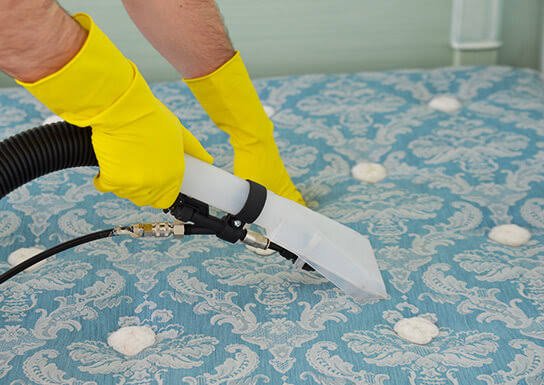
Advice on steam cleaning mattresses is mixed, and the difference is control. Home steamers and hire machines can push too much moisture into the mattress, which is how mould starts. Professionals use controlled-moisture methods so the mattress dries quickly.
Our mattress cleaning in Perth covers a deep vacuum of both sides, stain spotting with solutions suited to the fabric, a sanitising steam treatment and a deodorising finish. Most mattresses are ready to use again within a few hours. We recommend a professional clean every 6 to 12 months, or after any significant spill. We’ll also tell you honestly before we start if a stain is unlikely to come out completely.
Fabric Cleaning for the Rest of the Bedroom
Your mattress sits among other fabrics that hold the same dust and body oils. Bedroom carpet benefits from carpet steam cleaning, and upholstered bedheads and chairs from upholstery cleaning. Booking them together gives a more complete result.
Stubborn Stain, Lingering Odour or Early Mould?
Send us a photo and we’ll tell you what’s realistic before you commit. Get a free quote or call 0406 542 992.
Frequently Asked Questions
- How often should I clean my mattress?
Vacuum every month or two, wash your protector and bedding regularly, and book a professional clean every 6 to 12 months or after a major spill. - Can I steam clean my mattress at home?
It’s risky. Too much moisture can lead to mould, so a controlled-moisture professional clean is the safer choice. - What’s the safest way to remove mattress stains?
Blot quickly, use minimal liquid, match the method to the stain (cold water for blood, an enzyme cleaner or vinegar for urine), and dry the mattress fully. - How do I get rid of a musty mattress smell?
Sprinkle baking soda, leave it for a few hours and vacuum. If the smell returns, check for trapped moisture or mould.