A mattress soaks up more than you would think. Between spilled coffee, sweaty nights, pet accidents and the occasional nosebleed, most mattresses collect stains long before they show any other sign of wear. The good news is that almost every common stain can be treated at home if you know what you are dealing with and act quickly.
This guide breaks down the most common types of mattress stains, why they happen, and the exact cleaning method for each one. We will also cover when a stain is too deep or too old for DIY methods, and how professional steam cleaning can save a mattress that home remedies could not fix.
Why Mattress Stains Are Hard to Remove
Unlike a shirt or a bedsheet, you cannot throw a mattress in the wash. Liquid that lands on the surface soaks through the cover fabric and into the foam or fibre layers underneath within seconds. Once it is inside the comfort layer, it sits in a warm, dark environment that is ideal for bacteria and odour to develop.
This is why speed matters more than anything else when treating a mattress stain. A fresh spill wiped up in the first few minutes is far easier to remove than the same stain a week later, once it has dried and bonded to the fabric.
A few rules apply no matter what type of stain you are dealing with:
- Blot the liquid, never rub it. Rubbing pushes the stain deeper and spreads it sideways.
- Use cold water on any stain that involves blood, sweat or other bodily fluids. Heat cooks the protein in these stains and sets them permanently.
- Always test a cleaning solution on a hidden section of the mattress first, since some products can lighten or discolour fabric.
- Dry the mattress completely before putting sheets back on. A damp mattress is a mould risk within 24 to 48 hours.
Common Types of Mattress Stains and How to Clean Them
1. Blood Stains
Blood is one of the most common mattress stains, especially with kids, injuries or that time of the month. It is also one of the more treatable stains if you catch it early.
How to clean it:
- Blot the area with a cold, damp cloth immediately. Never use warm or hot water.
- Mix a small amount of three percent hydrogen peroxide with cold water and dab it onto the stain. It will foam slightly, which is normal.
- Blot with a clean cloth and repeat until the stain lifts.
- For dried or older blood, a paste of salt and cold water left on the stain for thirty minutes can help draw it out before blotting again.
- An enzyme based cleaner is a safer option on memory foam, since peroxide can degrade the foam over repeated use.
2. Urine Stains
Urine stains show up often in homes with young children, pets or elderly family members, and they bring both a visible mark and a lingering smell.
How to clean it:
- Blot up as much liquid as possible with clean towels.
- Apply an enzyme based cleaner and let it sit for ten to thirty minutes. Enzymes break down the uric acid that causes the odour, which regular detergent cannot do.
- Lightly mist the area with a mix of one part white vinegar to one part water to neutralise any remaining smell.
- Sprinkle a generous layer of baking soda over the spot and leave it for several hours or overnight, then vacuum thoroughly.
- Dry the mattress fully with fans or open windows before remaking the bed.
Avoid ammonia based cleaners on urine stains. Ammonia has a similar smell to a compound found in urine and can actually attract repeat accidents in the same spot.
3. Sweat Stains
Sweat stains build up slowly and show up as yellow patches where you sleep. They are rarely dangerous, but they are unsightly and can affect the resale or trade in value of a mattress.
How to clean it:
- Sprinkle baking soda over the stained area and leave it for several hours before vacuuming.
- Mist with a diluted white vinegar solution, leave for ten minutes, then blot dry.
- For older, set in yellow marks, an enzyme cleaner usually works better than baking soda or vinegar alone.
- For stubborn stains, repeat the process: enzyme cleaner first, vinegar rinse, then an overnight baking soda treatment.
A breathable mattress protector is the single best way to stop sweat stains from forming in the first place.
4. Vomit Stains
Vomit stains combine stomach acid, food particles and moisture, which makes them one of the more unpleasant messes to deal with, especially with young children or a sick pet.
How to clean it:
- Scrape off any solid material carefully with a spoon or blunt edge before it dries further.
- Blot the area with cold water to lift as much residue as possible.
- Apply an enzyme cleaner to break down the acid and protein content, then let it dwell for fifteen to twenty minutes.
- Rinse by blotting with a clean damp cloth, then apply baking soda and leave overnight to absorb any remaining odour.
- Vacuum thoroughly and allow the mattress to dry completely before use.
5. Coffee, Tea and Wine Stains
Drinks are some of the most common accidental spills, especially if you enjoy breakfast in bed or a glass of wine while watching something before sleep.
How to clean it:
- Blot the spill immediately with a clean cloth. Do not press it further into the mattress.
- For coffee or tea, mix a teaspoon of mild dish soap with a cup of cold water, dab it onto the stain, then blot dry.
- For wine, sprinkle salt or baking soda over the wet stain to absorb the liquid before it sets, leave for ten to fifteen minutes, then vacuum.
- Treat any remaining discolouration with the dish soap solution, working from the outside of the stain inward.
- For dried coffee or wine stains, hydrogen peroxide diluted with water often lifts what soap alone cannot.
6. Chocolate and Food Stains
Chocolate and other sugary or greasy foods leave behind a mix of protein, fat and sugar, which is part of why they resist a single cleaning method.
How to clean it:
- Scrape off any solid residue first.
- For greasy stains such as butter or oil, sprinkle baking soda or cornstarch over the area and leave for thirty minutes to absorb the oil before vacuuming.
- Apply a small amount of dish soap mixed with cold water and blot the area.
- Finish with an enzyme cleaner on any lingering mark, particularly for chocolate, which contains milk proteins.
7. Period Stains
Period stains are completely normal and nothing to feel awkward about. They respond to the same treatment as other blood based stains.
How to clean it:
- Blot immediately with cold water. Never use hot water, as it will set the stain.
- Apply three percent hydrogen peroxide directly to the stain after testing on a hidden area first, and let it foam before blotting.
- For older stains, an enzyme cleaner with a thirty minute dwell time works well.
- A salt and cold water paste left on the mark for thirty minutes can help lift what remains before a final blot.
When to Call a Professional Instead of DIY
Home remedies work well on fresh stains and light discolouration, but there comes a point where DIY methods hit their limit. It is worth calling in a professional mattress cleaner if:
- The stain is old, set in, or covers a large area of the mattress.
- You have tried two or three treatment rounds with no visible improvement.
- There is a persistent odour that keeps coming back after cleaning.
- The mattress feels damp or has developed a musty smell, which can point to mould starting inside the foam.
- You are dealing with a valuable or newer mattress and do not want to risk damaging it with the wrong chemical combination.
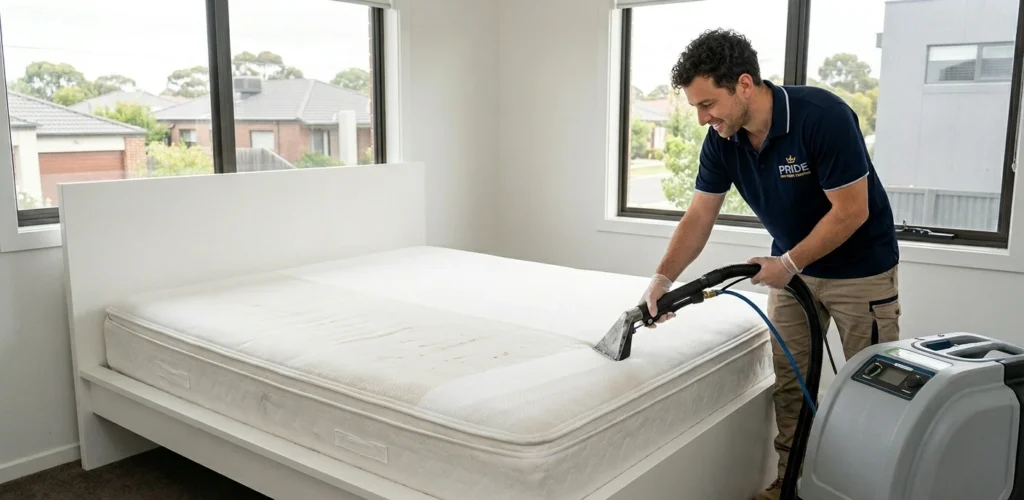
Professional mattress cleaning uses hot water extraction and commercial grade enzyme treatments that go deeper than anything available off the shelf, and it removes moisture far more thoroughly, which lowers the risk of mould developing after the clean.
Get Your Mattress Professionally Cleaned in Perth
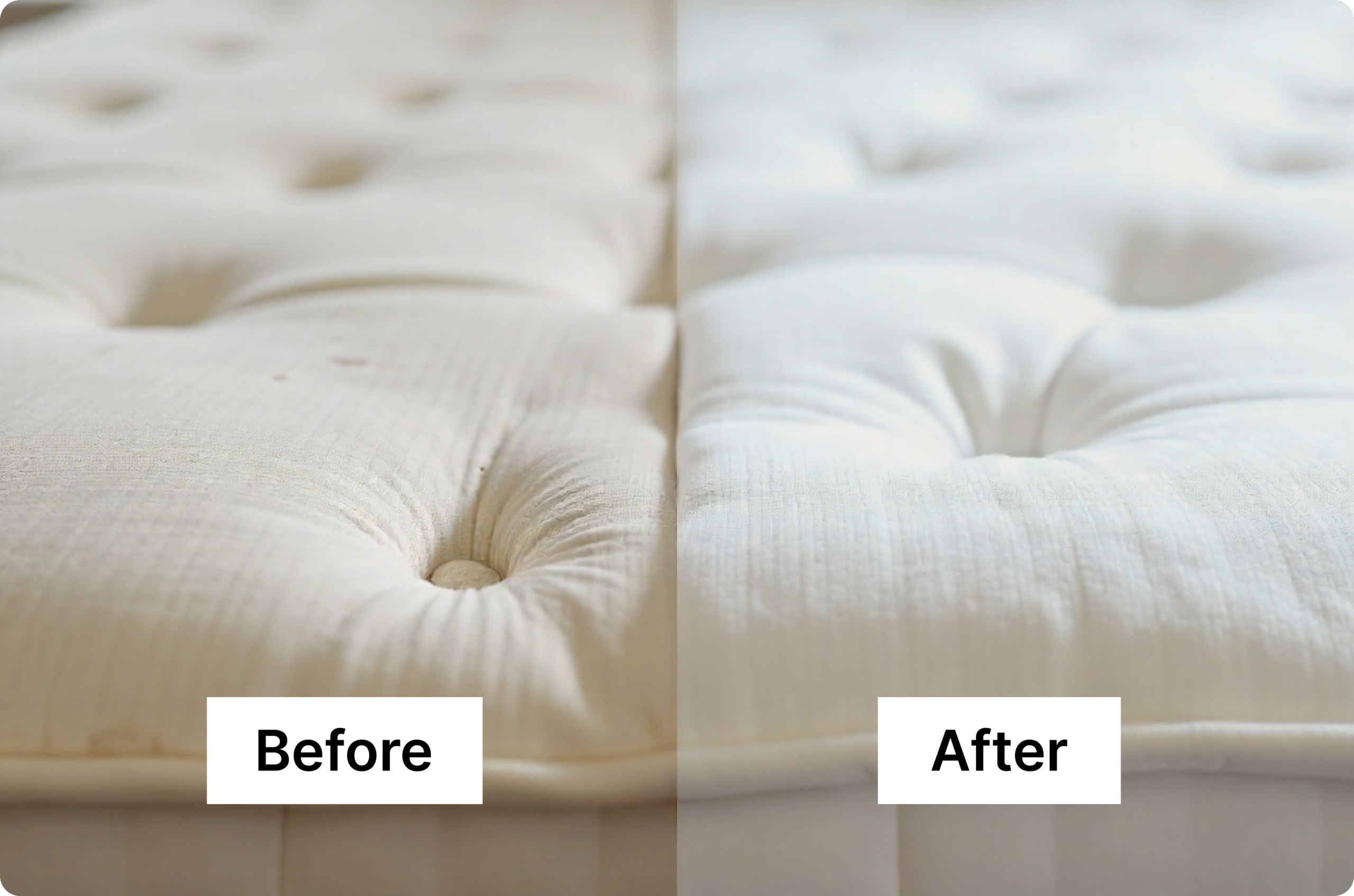
If you have tried the steps above and the stain, smell or overall condition of your mattress is still not where you want it, Pride Carpet Cleaning can help. Our professional mattress cleaning service in Perth covers a full vacuum, targeted stain treatment, and steam clean to remove dust mites, bacteria and stubborn stains that home methods cannot fully lift, without leaving your mattress soaked or full of chemical residue.
We also offer carpet stain removal in Perth if the same spill made it onto your carpet or rug, and every job is backed by our stain free guarantee.
Call us on 0406 542 992 or book your mattress clean online and we will have your mattress fresh, sanitised and ready to sleep on again.
Frequently Asked Questions
- How do you get blood out of a mattress?
Blot with cold water immediately, then apply three percent hydrogen peroxide or an enzyme cleaner. Never use hot water, since heat sets the protein in blood and makes the stain permanent. - Can old, set in stains actually be removed?
Often, yes, though they usually need two or three treatment rounds. Apply an enzyme cleaner, let it sit for fifteen to thirty minutes, blot, and repeat. Very old or widespread stains may need professional treatment to fully lift. - How long should a mattress dry after cleaning?
Allow at least twenty four hours of air drying before putting sheets back on. Use a fan or open a window to speed this up, since a damp mattress can develop mould within forty eight hours. - Is professional mattress cleaning worth it in Perth?
Yes, especially for allergy sufferers or mattresses with deep set stains and odours. Professional steam cleaning reaches dust mites, bacteria and biological residue that vacuuming and home remedies cannot fully remove, and extracts moisture properly to avoid mould risk.